Who Decides What a Sound Is Worth?
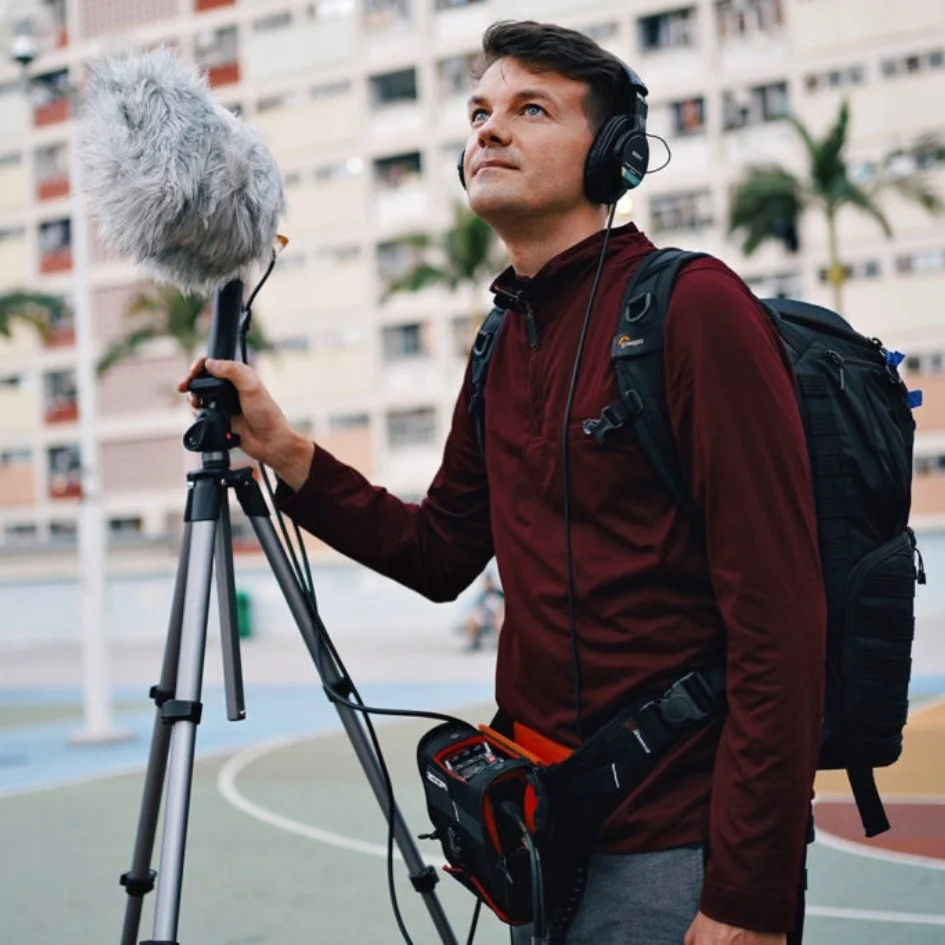
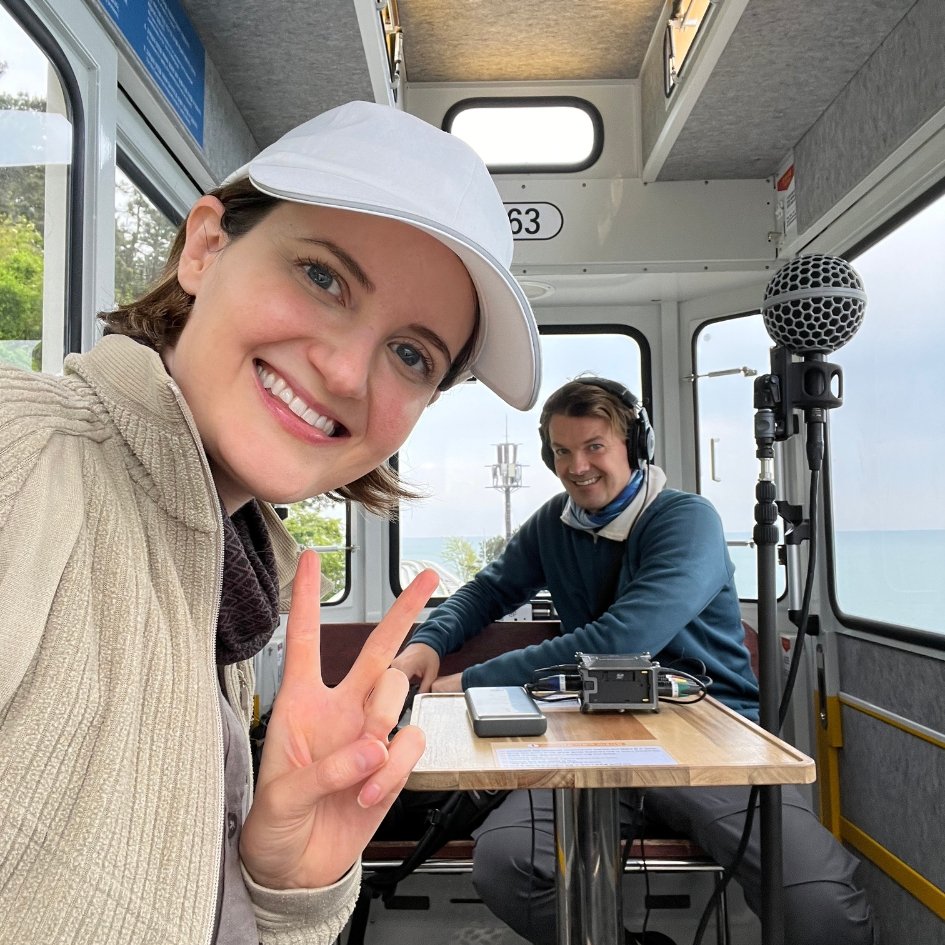
When I started field recording in 2017, I knew absolutely nothing about the business side of selling sound recordings.
I knew I loved recording sounds. I knew I wanted other people to use them. But when I started looking at how recordings were actually sold, I became fascinated by something I had never really thought about before.
What is a sound recording actually worth?
And when I started reading through forums and discussions online, I quickly realized I wasn’t the only person asking that question.
Not simply what it cost to make.
Not simply how many hours someone spent recording it.
Not simply what microphone was used, or how much that microphone cost.
But what is the finished recording actually worth to the person who needs it?
I didn’t know the answer.
Almost ten years later, we believe we found ours.
Not an answer that has to work for everyone, but one that works for us.
And over the years, through plenty of trial and error, that question ended up influencing almost everything about the way we built Free To Use Sounds.
When I started looking at the sound effects market back then, there were already several established ways for people to buy and access sounds.
You had places such as Freesound, where people shared individual recordings for free. You had independent and commercial libraries selling everything from relatively small collections to much larger packs for premium prices. There were websites where individual recordings were sold one by one, and subscription services where a monthly or annual fee gave you access to thousands of recordings.
Clearly, those models worked for many creators and customers.
But none of them made me think, that’s exactly what I want to do.
And as someone entering this relatively hidden world without any established ideas about what a sound should cost, all those different approaches raised even more questions for me.
Who had decided that one recording was worth $5?
Who had decided that a library was worth $200?
And perhaps more importantly: what happens if the person who actually needs the sound disagrees?
That was the question I kept coming back to.
What It Cost Me Isn’t What It’s Worth to You
A field recordist might fly to the other side of the world specifically to make a sound library, spend thousands of dollars on microphones and recorders, rent a car, pay for hotels, drive for hours, wake up before sunrise, wait days for the right weather and then spend another week editing, naming and organizing everything.
All of those costs are real.
The effort is real too.
And of course they matter when you’re running a business. Whether you’re one person or a company employing fifty, you need to understand what it costs to create something if you want that business to eventually stand on its own, without relying on another job or business to support it.
But our situation was a little different.
We were already traveling the world full time before I started field recording.
For example, we didn’t choose Hong Kong because I had calculated that a Hong Kong sound library would make the trip financially worthwhile. We went because we wanted to experience Hong Kong.
That is still how we travel today.
We choose places because we want to explore them. Somewhere along the way, recording sounds became part of how we travel and how I experience those places.
So I never really looked at a flight, a hotel room, a train ticket or a meal and thought: the sound library I create here needs to pay this back.
Those were costs of the life we had already chosen to live.
Of course, recording added its own costs. Equipment cost money. Storage, software, websites and other services cost money. And eventually, if Free To Use Sounds was going to become a business that could stand on its own, it had to generate enough income to support what we were doing.
But that still didn’t mean what something cost us determined what it was worth to somebody else.
Imagine I created a 100 GB Hong Kong sound library.
I knew how much work had gone into it. I remembered carrying the equipment around, waking up early, exploring and recording throughout the day and late into the night. I knew how much the microphones and recorders cost and how many hours I would later spend editing, naming and organizing everything.
But while writing this article, I actually went back and listened to some of those Hong Kong recordings on our Bandcamp page.
And what came back to me wasn’t the cost.
I remembered how much fun I had making them. I remembered the places, the people, the streets and particular moments surprisingly vividly. Hearing those sounds again brought back emotions and memories I hadn’t thought about in years.
Those recordings have a value to me that I couldn’t put a price on.
But that is my value.
The customer listening to the same recording brings an entirely different story to it.
I could have added the flights, hotel, meals, public transportation and every other expense from our time there and concluded that the library needed to sell for $200 or $300 to justify those costs.
There would have been absolutely nothing wrong with doing that.
But that wasn’t how I looked at our travels.
Consider something as ordinary as the $20 I spent on dinner one evening.
That was a real expense of being in Hong Kong.
Did it make the recordings more valuable to the customer?
Of course not.
It didn’t make them more useful. It didn’t make them more unique. It didn’t make them sound better.
And even if I had decided that I needed $300 for the library to make financial sense to me, that still wouldn’t mean the customer thought it was worth $300.
Now turn the transaction around.
The sound designer looking at my Hong Kong library had arrived with an entirely different problem.
Maybe they were working on a film and needed ten minutes of Hong Kong street ambience.
Maybe they needed the sound of a particular market, subway station or intersection.
Perhaps the exact recording they needed was somewhere inside those 100 GB.
From my perspective, I had 100 GB of recordings from Hong Kong.
From their perspective, they might simply be looking for one sound that solved one problem.
They weren’t asking themselves what my flight had cost.
They weren’t wondering what I had spent on dinner.
They were asking:
Does this make sense for me?
And from very early on, that was much closer to the question I cared about too.
I wasn’t thinking:
How many people need to pay $200 for this library so I can recover what it cost us to be in Hong Kong?
I was thinking:
How many people can I reach who actually need these sounds?
I knew that way of thinking didn’t necessarily fit with how some other field recordists thought about selling their work. But I wasn’t trying to build a business around what made sense to other field recordists.
I wanted to see how far we could take our own idea.
Whether every person we reached paid for the recordings wasn’t even my first concern.
I wanted the recordings to be used.
That was why I had started sharing sounds in the first place, and it became an important part of how we built Free To Use Sounds.
If more people could discover the recordings, use them and find value in them, I was much more interested in seeing where that could lead than trying to make every individual library recover some predetermined share of what our travels had cost us.
And that naturally led to another question:
What If the Customer Could Decide?
Before we ever developed a real business model around Free To Use Sounds, I did something much simpler.
I uploaded videos to YouTube, put a Dropbox download link underneath them and let people have the recordings.
There was no clever business model behind it and no carefully designed pricing strategy.
I was simply trying to solve a problem we had experienced ourselves: finding good sounds when we needed them.
So I made some of mine available and watched what happened.
People downloaded them.
Actually, so many people downloaded them that Dropbox quickly restricted the link because of the traffic.
Well, that created another problem to solve. :)
But it also told me something.
There were far more people out there looking for sound recordings than I had imagined.
And then something else started happening.
People began asking us how they could support what we were doing.
I remember seeing messages from people telling us how much they appreciated the recordings and asking if there was some way they could contribute.
It didn’t happen just once.
Eventually, Libby said something along the lines of:
Why don’t I build us a website and we add a donation button?
And I think the order of events matters here.
The response came before the business model.
We didn’t start by creating a product, calculating what it should cost and then trying to convince people to buy it.
We shared the recordings.
People used them.
Some of those people then asked us for a way to support what we were doing.
So Libby built the website, we added Ko-fi, and a minimum contribution gave people access to our new Complete Library, including future uploads.
Then, still in 2017, we discovered Bandcamp and began releasing our libraries there using Pay What You Want from day one. Eventually, those releases also became our Full Discography.
That was when the question of value became particularly interesting to me.
Instead of deciding on one fixed price and telling everyone, this is what this library costs, Pay What You Want gave people a choice.
Of course, many chose to pay nothing.
But others didn’t.
Some contributed a little. Some contributed a lot more. And some came back and supported us again as we continued traveling and releasing new recordings.
At the same time, we were documenting what went into creating those sounds. Through YouTube, our website and later Facebook and Instagram, people could see where we were traveling, what equipment we were using and where the recordings actually came from.
The sounds were accessible, but the work behind them wasn’t invisible.
People weren’t simply looking at an anonymous collection of WAV files. They could see the journey behind the recordings, the places, the equipment and the person making them.
Then they could decide what they wanted to do.
Some people had the option to pay nothing and chose to support us anyway.
But even that didn’t necessarily tell me exactly what they thought a recording was worth.
Someone might have found a library incredibly valuable and still downloaded it for free because, at that point in their life, paying for sound libraries simply wasn’t an option.
And over the years, we saw something happen again and again.
People who had first discovered our recordings as students would come back years later and email us. They would tell us that while they were studying, our free recordings had been very useful to them. Now they were working professionally, earning their own money and wanted to come back and support us by purchasing one of our bundles.
That happened many times.
And I always found it meaningful because it showed me how little the original transaction told us about the value of those recordings to that person.
They might have paid nothing.
But that didn’t mean the recordings were worth nothing to them.
It simply reflected where they were at that moment in their lives.
Years later, when their circumstances had changed, some made a completely different decision.
Others chose to pay more from the beginning, not because they had calculated the monetary value of every recording, but simply because they wanted to support what we were doing.
That made the original question even more interesting.
What someone pays and what something is worth to them aren’t necessarily the same thing.
Pay What You Want didn’t give us a definitive answer to the value of our recordings.
It gave us something more useful.
A chance to observe what people actually did when we stopped making every part of the decision for them.
And what they did told us enough to keep going.
Someone Else’s Experience Doesn’t Define What’s Possible
When I was starting out, I spent a lot of time reading forums and discussions about selling sound recordings.
I was completely new to the business of selling sound recordings, so naturally I was curious what people who had been doing it for much longer thought.
One thing I noticed was that people with many years of experience in field recording would sometimes give newcomers fairly definite advice about what was financially possible.
A common opinion was that selling your own recordings probably wasn’t sustainable as a full-time income, but could become a nice side business.
That always made me stop for a moment.
Not because there was anything wrong with building a side income from sound recordings. There isn’t. For many people, that might be exactly what they want.
What interested me was how easily someone’s personal experience could become a statement about what was possible for everyone else.
There is a difference between saying:
“I haven’t been able to make a full-time living from this.”
And saying:
“You can’t make a full-time living from this.”
By the time I came across some of those discussions, Free To Use Sounds was already growing beyond what I was being told was realistically possible.
That put me in an interesting position.
I could have joined those conversations and said, actually, that hasn’t been our experience.
But I rarely saw much reason to.
The people using our recordings were already giving me a much more useful answer through their behavior.
And that gradually taught me an important distinction.
Someone can have twenty years of experience in a craft and know vastly more than I do about certain parts of it.
But twenty years of recording sounds doesn’t automatically mean twenty years of successfully building an online business around those recordings.
Those are different skills.
Someone might be an extraordinary field recordist and have little interest in marketing. Someone else might be brilliant at sound design but have never built an audience. Another person might have sold libraries for fifteen years but never wanted, or managed, to turn that into their primary income.
Their experience may be completely valid.
But so are the limits of what that experience can tell you.
And after all these years, I’ve seen just how wide the range of outcomes can be.
I know people who have made almost nothing from selling their recordings and eventually gave up trying. I also know people who have built businesses around sound recordings that generate seven figures.
And there is everything in between.
The existence of someone making nothing doesn’t prove that nothing can be made. And the existence of someone making seven figures doesn’t mean you will.
It simply shows how difficult it is to give one answer to the question:
How much can you make selling sound recordings?
There are too many variables, and the person asking the question matters enormously.
What are they trying to build? How much time are they willing to put into it? Can they create recordings people actually need? Can those people find them? Can they build trust? Can they reach an audience? And are they willing to keep going long enough to find out where it leads?
Two people can enter the same field with similar equipment and build completely different businesses.
And I think that distinction matters when you’re starting out.
When someone established tells you that something isn’t sustainable, it’s tempting to treat that statement as evidence simply because they have been doing it longer than you.
But I learned to ask a different question:
Have they actually built the thing they’re telling me cannot be built?
If the answer was no, I became much more careful about allowing their conclusion to become mine.
We Weren’t Necessarily Selling the Same Thing
As our collection grew, I began to understand that comparing the price of one of our libraries with the price of another independent sound library didn’t necessarily tell you very much.
We weren’t necessarily selling the same thing.
A creator selling individual libraries might reasonably look at a collection they spent weeks creating and decide it needs to sell for $50, $100 or $200.
Their goal might be to make each library profitable on its own.
There is absolutely nothing wrong with that.
But we were gradually building around a different idea.
We weren’t only thinking about the value of an individual recording or an individual library.
We were becoming increasingly interested in the value of access.
Imagine someone working on a film who needs a handful of sounds for one particular project.
They might find a beautiful independent library containing exactly what they need for $50.
Maybe that’s worth it to them.
But that $50 library isn’t their only option.
They might join a subscription service, download what they need under that service’s licensing terms and cancel when they no longer need it. They might buy individual recordings somewhere else. They might find something free.
Or they might decide that paying once for access to a much larger collection makes more sense for the way they work.
From the customer’s perspective, all of those are competing solutions to the same problem.
And that was something I thought about a lot.
A customer wasn’t necessarily comparing our $5 library with somebody else’s $50 library and deciding which one represented the “correct” value of those recordings.
They were trying to solve a problem.
Where can I find the sounds I need, under a license that works for me, at a price that makes sense for what I’m doing?
That changed the economics for us.
Nobody needs several terabytes of sound recordings for one project.
That isn’t the point.
The value is knowing that when you need rain from a forest in Thailand, a subway passing by in Shanghai, a bird call from Australia or a particular city ambience, there is a good chance you already have access to something useful.
You aren’t necessarily buying every recording because you need every recording.
You are buying the possibility that the next time you need something, it might already be there.
That was much closer to what we were building.
And once I understood that, I became even less interested in trying to establish the “correct” price of an individual sound.
Sometimes the Answer Is Time
Of course, pricing is only one reason somebody buys something.
Over the years, we’ve thought constantly about everything surrounding the recordings too.
Could people find them?
Did our titles contain the words people were actually searching for?
Did the descriptions explain what was inside?
Could someone listen to useful previews?
Was the license understandable?
Did people know who had recorded the sounds and where they came from?
Could they trust that if they had a question six months later, somebody would actually answer them?
None of those things guarantees a sale.
But all of them can influence one.
The recordings, the titles, the metadata, the descriptions, the way people discovered them, the price, the license and the products themselves were all things we could work on and improve over time.
But I never assumed that a library not selling immediately meant something was wrong with it.
There was another factor I gradually learned not to underestimate.
Time.
A library not selling today doesn’t necessarily tell me anything about what it will do tomorrow, next month or three years from now.
I can release a sound library today and barely see any response to it, only for people to start discovering and buying it much later.
At the same time, recordings I made back in 2017 are still being purchased today.
Every library seems to have its own timeline.
Something I release today might sell next year.
Something I recorded years ago might suddenly be exactly what someone needs this week.
So I’ve never felt the need to panic because one particular library wasn’t selling immediately.
We created it.
We made it available.
We moved on and created the next one.
And as the collection grew, something else happened.
A recording didn’t necessarily have to justify its existence through an immediate sale anymore. It became another possibility inside a much larger collection.
Maybe nobody needed that particular sound today.
But somebody might need it next month.
Or next year.
And the larger the collection became, and the longer those recordings remained available, the more opportunities there were for someone to eventually arrive looking for exactly what we had recorded.
Sometimes something needs improving.
Sometimes something needs repricing.
And sometimes nothing is wrong at all.
Sometimes the recording simply needs to exist long enough for the person who needs it to find it.
So Who Decides What a Sound Is Worth?
While writing this article and looking back at everything that happened, I realized something.
I think I began finding my answer much earlier than I knew.
It was 2017, and we were in Costa Mesa, California.
I was sitting at my computer when an email came in notifying me that someone named Justin G. had donated $3 to access our Complete Library.
Three dollars.
Financially, you might look at that number and think there was nothing particularly remarkable about it.
But I still remember sitting there looking at that email because something had just happened that completely changed the way I thought about what we were doing.
At the time, we had installed Ko-fi on our website and set the minimum contribution at the price of a coffee: $3. People could choose to contribute more, but if they wanted access to the Complete Library, $3 was the minimum.
So I had decided what we were willing to offer and the minimum contribution for accessing it.
But Justin still had a decision to make.
Was that offer worth saying yes to?
And for him, it was.
Strangely enough, my next thought wasn’t:
How do I get Justin to pay $30 instead?
It was:
If one person is willing to give us $3 for access to our recordings, how do I find another person who feels the same way?
And then another.
And another.
The $3 itself wasn’t going to change our lives.
But what it represented changed the way I thought about the entire idea.
And there is something about that story that means even more to me today.
Justin never disappeared.
All these years later, he still supports us through Bandcamp, where he has access to our libraries, and over the years he has purchased access to other collections we’ve created as well.
I’m forever grateful for that, not simply because of the financial support, but because when I think back to that $3 contribution in Costa Mesa, I realize how little that first transaction actually told me about what our recordings would eventually be worth to him.
Three dollars wasn’t the value of that relationship.
It was the beginning of it.
And perhaps that gets closer to the answer I’ve been looking for.
There isn’t one permanent value attached to a sound recording.
A recording can be worth nothing to one person because they have absolutely no use for it.
The same recording might solve a problem for somebody else.
And sometimes its value has nothing to do with a project at all.
Something happened while I was writing this article that reminded me of that.
I was at my physiotherapy center in Bangkok when we noticed a high pitched noise coming from the external speakers. I showed her how she could mask it by playing a recording of heavy rain on YouTube.
We sat there for a moment listening to the rain, and the high pitched noise disappeared underneath it.
Then she told me that the sound reminded her of her childhood in Isan. The pounding rain took her back to sitting under a roof as a child, listening to the rain and the wind moving through the rice fields around her.
She lives and works in Bangkok now, but for a moment, that sound had taken her somewhere else.
I found that incredibly powerful.
To me, it was a practical solution to an annoying noise in a room.
To someone working on a film, that same kind of recording might be useful for a scene.
To her, it brought back a childhood memory.
The sound hadn’t changed. The person listening to it had.
And how could I possibly decide what that experience was worth to her?
That’s the thing about sound. Its value can change completely depending on the person listening.
To one person, a recording might simply be a WAV file they have no use for. To another, it might solve a problem in a film they’re working on. And to someone else, it might bring back a place, a person or a moment they haven’t thought about in years.
None of those forms of value necessarily tells us what someone will pay for the recording either.
Someone might use one of our libraries for free today and support us years later.
Someone might pay $3 and stay with us for years.
Someone else might make one much larger purchase, get exactly what they need and never buy another recording from us again.
None of them is wrong.
They are simply making different decisions about what those recordings are worth to them at different moments.
I can decide what to record.
I can decide what to spend creating it.
I can decide how to package it.
I can decide what price or payment options to offer.
But I cannot make the final decision about what it is worth to the person on the other side.
They bring their own project, their own budget, their own needs and their own circumstances to that decision.
My job is to give them something worth saying yes to.
And I think there is an important distinction in that, especially if you’re just starting out.
Take pride in what you create.
Know what went into it.
Understand your costs.
Build the business you actually want to build.
But don’t let pride convince you that everyone else must arrive at the same conclusion about what your work is worth.
Someone else might choose a completely different path from ours. They might sell a library for $200 and wait for the customer who believes it is worth $200. Someone else might charge much less and build a model around reaching far more people.
Either can work.
They don’t need my validation.
And I don’t need theirs.
There doesn’t need to be one correct price.
There doesn’t need to be one correct business model.
And we don’t all need to agree.
If you’re starting out, look around. Learn what already exists. Pay attention to people with experience.
But don’t confuse somebody else’s experience with the limits of what is possible for you.
Eventually, you have to put what you created in front of the people you actually created it for.
Then watch what happens.
Maybe nobody wants it.
Maybe something needs to change.
Maybe it simply needs more time.
Or maybe the first signal will be so small that it would be easy to overlook.
Mine was $3.
It didn’t tell me what our sounds were worth.
It told me something much simpler.
One person wanted what we had created enough to say yes.
And at that moment, that was all I needed to know.
I didn’t need to know how big Free To Use Sounds could become. I didn’t need everyone in the field recording world to understand what we were doing. And I certainly didn’t need to have the entire business figured out.
I just needed to find the next person.
And then the next one.
Year after year, the recordings accumulated. So did the people using them.
And eventually, something that had started with a $3 payment in Costa Mesa became the work you see today.
Not because we discovered the correct price for a sound recording.
We never did.
We found a model that worked for us, kept building it and gave it time to grow.
And maybe that is my answer after all.
I can decide what I’m willing to offer.
The person on the other side decides whether it is worth saying yes to.
And if I could add one final lesson for anyone starting out, it would be this:
Don’t spend all your time trying to discover the perfect price before you’ve done the work of helping enough people discover what you created.
A digital product can be changed. You can change the price. You can change the description, the previews, the way it is packaged or the way people access it.
But first, people have to find it.
You can put a price on a sound library, hit publish and wait. And if nothing happens, it’s easy to conclude that the price must be wrong.
Or perhaps that someone else selling similar recordings for much less is the reason yours isn’t selling.
But how would you know?
Maybe the price really is the problem.
But maybe hardly anyone has found the library in the first place.
Maybe the people who did see it didn’t need those particular sounds. Maybe they didn’t know who you were yet. Maybe they didn’t understand what they were getting. Or maybe you simply haven’t given it enough time.
Without enough people reaching the product, it becomes very difficult to learn much from the fact that nobody bought it.
That is why, looking back, I’m glad my reaction to that first $3 wasn’t to ask whether $3 was the right price.
I asked how I could find the next person.
And I think that question took us much further than searching for the perfect price ever could.